
 Alpha Breaking
Jackson Hole Roundup: Warsh Sends Hike Chances... - Aug 31
Share this article
Spread the word on social media
The Big Picture
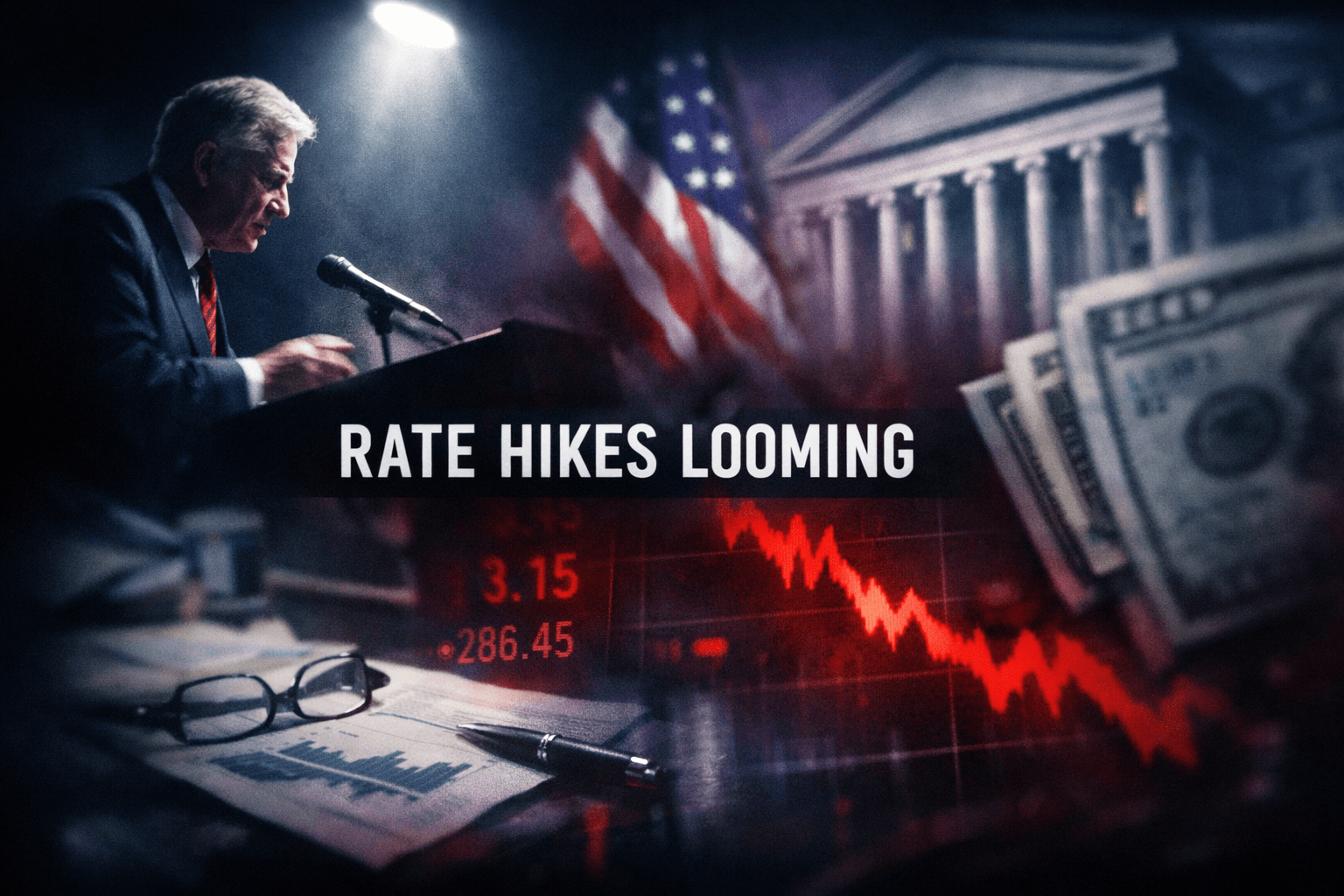
Kevin Warsh's hawkish Jackson Hole remarks tightened the short-term policy narrative and raised the odds of a relatively tighter Federal Reserve stance at the September FOMC meeting, creating a higher-risk backdrop for interest-rate sensitive assets.
For investors, that means re-evaluating duration exposure and growth-stock positioning as markets price in stricter policy. The remarks arrived on Aug 31 and have already moved sentiment toward caution.
What's Happening
Friday's Jackson Hole session featured a clear hawkish thread from Fed Chair Kevin Warsh, according to reporting and analyst commentary. Market participants interpreted the speech as increasing the probability of tighter policy, and analysts flagged the potential for policy and Treasury Department tensions.
- 2% — listed among the key data points in available context, a reminder of the fine margins policymakers track when evaluating inflation and real yields.
- 0% — another contextual figure investors should note when comparing baseline or historical reference points for policy shifts and consumer finance offers.
- $0.7160 — a numeric data point provided in the brief, useful for modelers and valuation sensitivity checks when small changes affect per-share metrics.
- Aug 31 — the date of this Jackson Hole update and the day markets began re-pricing nearer-term rate expectations following Warsh's speech.
Analysts emphasize that Warsh's tone didn't just nudge probabilities, it may widen the policy debate by putting the Fed at odds with Treasury views on timing and fiscal interactions. That dynamic can amplify market volatility as investors reassess duration, risk premia, and carry strategies.
Why It Matters For Your Portfolio
A hawkish Fed narrative increases the discount rate applied to future earnings, which typically pressures long-duration growth names and lifts yields on fixed income. Analysts note the move tightens financial conditions and could compress valuations across interest-rate sensitive sectors.
Who should care: growth investors monitoring $NVDA and other AI/semiconductor stocks; income investors watching bond and dividend yield trajectories; and traders focused on volatility in rate-sensitive sectors. Analysts say the tone raises near-term policy risk and potential friction with Treasury communications.
Risks To Consider
- Policy-U.S. Treasury Tension: If the Fed's stance diverges from Treasury direction, liquidity and market functioning could come under stress, increasing volatility across equities and bonds.
- Valuation Compression: Higher rates lift discount rates, which can reduce near-term multiples for long-duration growth stocks and pressure momentum strategies.
- Execution Risk: Rapid re-pricing around the September FOMC could force reactive portfolio moves, creating slippage for traders and tight windows for rebalancing.
What To Watch Next
Investors should stay focused on upcoming policy signals and market pricing measures that will determine how this narrative evolves into concrete moves.
- September FOMC meeting, scheduled in September — market pricing of policy ahead of the meeting will be critical to watch.
- Fed and Treasury comments — any follow-up remarks that clarify or escalate the apparent policy-Treasury tension could move yields and equity risk premia.
- Key metrics to monitor: the 2% and 0% reference points in available context and the $0.7160 figure for valuation sensitivity modeling.
- Short-term price action in rate-sensitive names, including large-cap technology, which tends to react to moves in real yields and policy uncertainty.
The Bottom Line
- Warsh's Jackson Hole remarks pushed near-term rate risk higher, prompting analysts to re-price the odds of tighter policy into September.
- Higher-rate expectations increase pressure on long-duration growth stocks and elevate volatility for interest-sensitive sectors.
- Monitor Fed-Treasury communications and market-implied policy pricing ahead of the September FOMC, and use the provided numeric data points for sensitivity checks in your models.
- Analysts note the potential for policy and Treasury divergence to amplify market moves, so be prepared for higher short-term risk rather than assuming calm.
FAQ
Q: How should I interpret Warsh's comments for interest-rate sensitive stocks?
A: Warsh's hawkish tone signals higher near-term rate risk, which tends to weigh on long-duration growth names. Analysts suggest reviewing duration exposure and valuation sensitivity in your holdings.
Q: Will this definitely lead to a rate hike at the September FOMC?
A: The speech increased the odds in market pricing, but it does not guarantee a hike. Investors should watch subsequent Fed communications and market-implied probabilities ahead of the meeting.
Q: What specific metrics should I track now?
A: Track market-implied policy pricing, Fed and Treasury remarks, and keep the available context numbers such as 2%, 0%, and $0.7160 in your sensitivity models to assess valuation and risk shifts.
Investment analysis provided for informational purposes only. This article does not constitute personalized investment advice.