
 Alpha Breaking
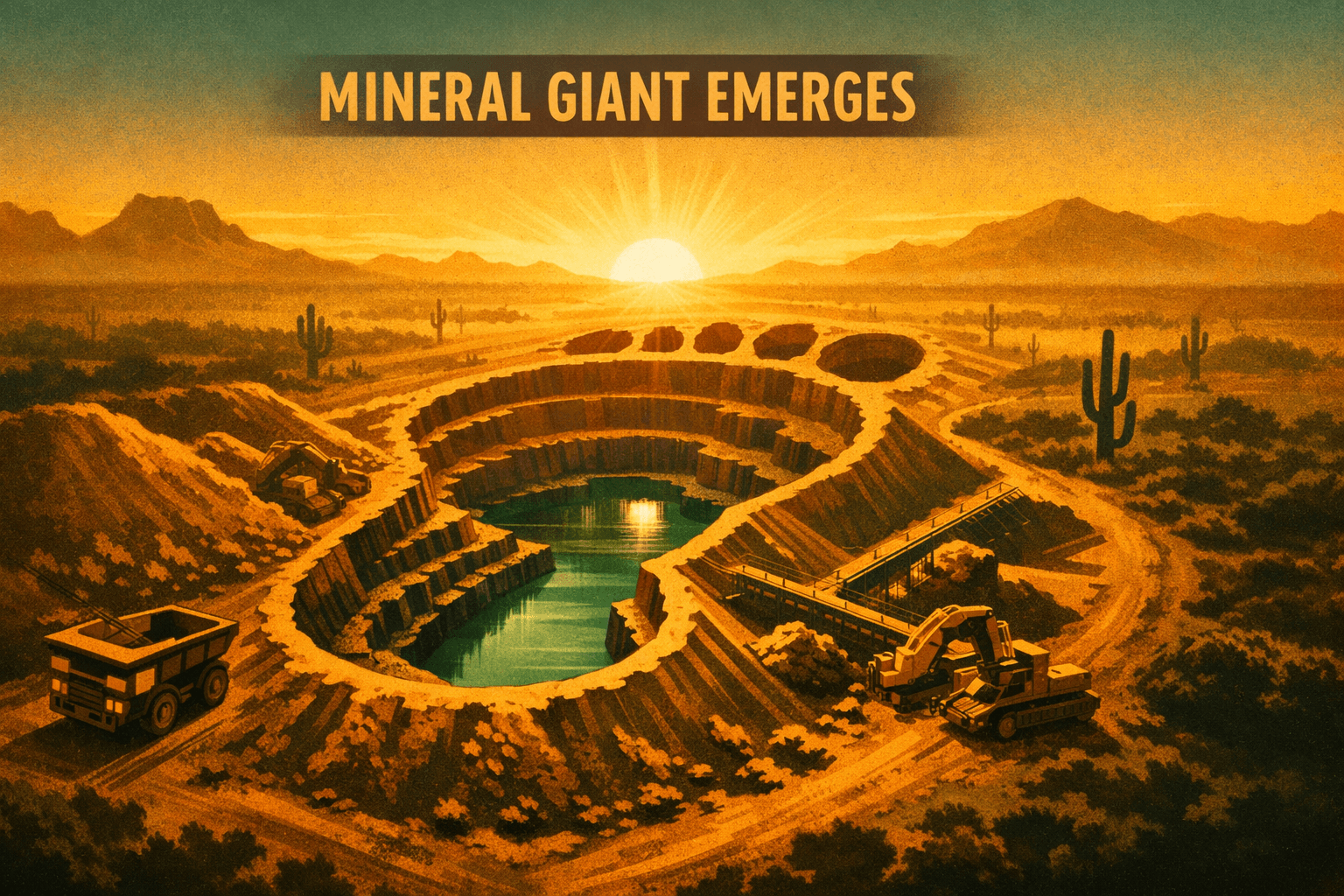
Arizona’s Fourth Largest Mineral Footprint Emerges
Share this article
Spread the word on social media
Liberty Star’s Hay Mountain Hits 31 Square Miles, Drawing Few Eyes
Liberty Star Minerals has expanded its Hay Mountain land package to more than 31 square miles with 13 new exploration permits, creating what the company says is the fourth largest mineral footprint in Arizona.
At the same time the explorer reported bonanza-grade gold assays topping 107 grams per tonne at Red Rock Canyon, alongside copper indications at Earp Ridge and encouraging rare earth element pathfinders. Despite scale and high-grade hits, the project remains largely off investors’ radar.
Why the numbers matter
A 31 square mile tenure in the historic Tombstone district gives Liberty Star a district-scale claim in a state already known for copper and gold. One assay of 107 g/t translates to roughly 3.44 ounces per ton, a bonanza number that gets attention in early-stage exploration.
The package now includes multiple targets: high-grade gold at Red Rock Canyon, a copper target at Earp Ridge, and geochemical signals consistent with rare earth element mineralization. Combined, those attributes create a multi-commodity optionality that can attract different buyer types.
Regulatory and political backdrop
Arizona has moved into the spotlight as a mining-friendly jurisdiction. State officials have emphasized permitting reforms and economic incentives for responsible mineral development, which can shorten timelines compared with other U.S. states.
That political tailwind reduces one common barrier for juniors, yet permitting, baseline studies and community consultation still take time. For a small explorer, even a friendlier jurisdiction does not remove technical, environmental and financing hurdles.
Liberty Star calls Hay Mountain a district-scale opportunity, but the market wants more than tenure and assays before taking notice.
Why the story is quiet — multiple viewpoints
Management is optimistic, citing the size of the land package and the mix of commodities as evidence of discovery potential. They argue that high-grade, localized gold hits plus copper and REE indicators make Hay Mountain uniquely investable in Arizona.
Market skeptics say juniors need systematic drill programs, resource estimates and metallurgy before a story gains traction. One high-grade assay is compelling, but markets typically demand consistent follow-up results and independent resource modeling.
Analysts also point to financing risk. Exploration at this scale costs millions. Without deep-pocketed partners or institutional backing, an expanded footprint can become a funding drain rather than a value-creating asset.
What would change investor attention in 2026
Step-out drilling that converts high-grade hits into a coherent, repeatable mineralized zone.
An initial resource estimate that demonstrates scale or near-surface ounces or pounds.
A strategic joint venture or farm-in with a major copper or gold producer, which would de-risk funding and validate exploration results.
Positive metallurgical testwork, especially for mixed gold-copper-REE mineralization.
Clear permitting milestones and community engagement outcomes that shorten the time to advanced studies.
Catalysts and timelines
For Liberty Star the near-term calendar to watch is drilling and assay returns. Systematic infill and step-out holes across the new permits would be the clearest value driver through 2026.
A joint venture announcement with a mid-tier or major miner would be transformational, shifting risk off the junior and signaling industry validation. That is often the fastest way a little-known explorer becomes a takeover or partner target.
Risks that could mute the story
Metallurgical complexity, if mineralization cannot be economically recovered with existing technology.
Permitting delays despite a favorable state posture, especially if environmental or cultural issues arise.
Funding shortfalls that force adverse financing terms and dilute early investors.
Exploration negative results, showing high-grade hits were isolated rather than part of a larger system.
How investors should think about it
This is a classic exploration risk-reward scenario. The upside is obvious: district-scale tenure, bonanza-grade assays and multiple commodities in a mining-friendly state.
The counterpoint is equally clear, success depends on follow-up drilling, metallurgy and the ability to finance a sustained campaign. For investors who buy discovery stories early, Hay Mountain is a watchlist candidate. For those who need visible resources or partner-backed programs, the project is still speculative.
Where the market could turn
If Liberty Star strings together consistent assays and publishes an initial resource by mid-2026, institutional analysts and majors will start paying attention. Until then this is a high-upside, high-risk story playing out on the margins of a wider Arizona mining renaissance.
For now, Hay Mountain is a large, intriguing claim in a favored jurisdiction, carrying exploration promise but still needing the proof that moves a company from under-the-radar to unavoidable.