
 Alpha Breaking
10-Year Treasury Yield Hits Highest Since 2007 - Sep 15
Share this article
Spread the word on social media
The Big Picture
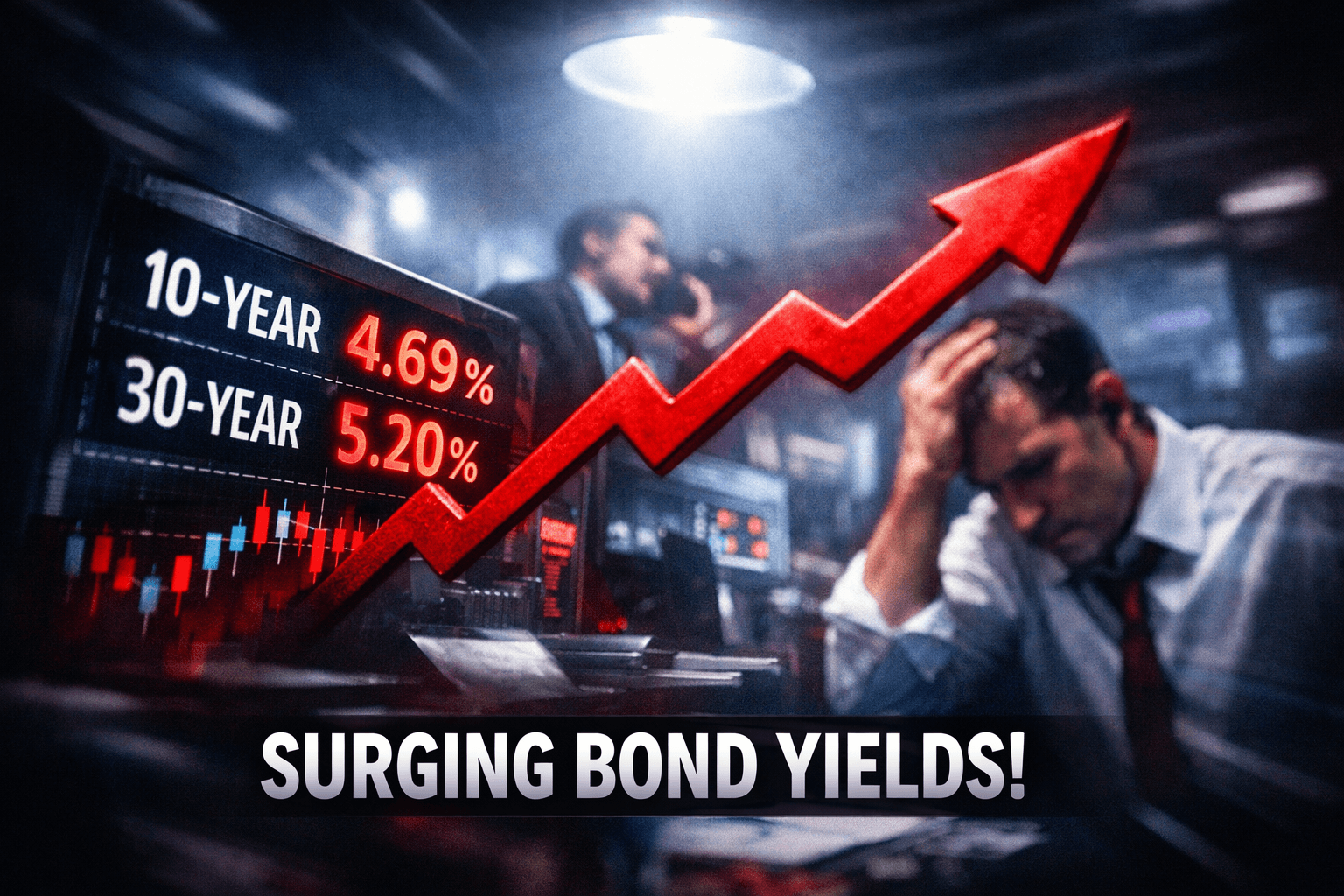
The 10-year Treasury yield surged to roughly 4.69% and was trading near 4.66% as investors intensified a sell-off in U.S. government debt, pushing the 30-year toward about 5.20%. That move reflects growing trader conviction that the Federal Reserve will tighten policy, and it raises financing costs across markets.
For investors, higher long-term yields mean borrowing costs climb, bond prices fall, and interest-sensitive sectors face renewed pressure. This shift demands a portfolio check on duration exposure and valuation sensitivity.
What's Happening
Market momentum is coming from expectations that the Fed will deliver another rate increase, prompting a repricing across the Treasury curve. Key data points from the session:
- 10-year Treasury yield rose to about 4.69%, trading near 4.66% during the session, signaling a step up in long-term borrowing costs.
- 30-year Treasury yield climbed to roughly 5.20%, its highest level since 2007, widening the long-end sell-off.
- Yields across the curve have now moved above 4% in many maturities, underlining a broad adjustment in fixed-income markets.
- Market commentary flagged 5% as a psychologically important level for longer-duration yields as traders reassess risk and return tradeoffs.
- A notable dollar figure cited in session moves was $31, reflecting outsized volatility in some interest-rate sensitive instruments during the sell-off.
Each of these numbers matters for valuation. A 10-year yield near 4.7% changes discount rates used in equity and corporate bond models, and a 30-year at 5.20% raises mortgage and long-term financing costs. Traders are reacting ahead of a Fed decision that markets expect will be hawkish, intensifying the move.
Why It Matters For Your Portfolio
Rising Treasury yields shift risk and opportunity across asset classes. Fixed-income holders face mark-to-market losses while savers may see better yields on cash and short-term instruments. Growth stocks and rate-sensitive sectors are pressured as discount rates climb.
Who should pay closest attention: growth investors who rely on long-duration cash flows, value investors watching discount-rate shifts, income investors tracking yield curve changes, and traders managing volatility and leverage. Analysts note this repricing could prompt cross-asset volatility and sector rotation.
Risks To Consider
- Policy Mispricing: If the Fed does not hike as aggressively as markets expect, yields could snap back lower, creating whipsaw risk for traders who lengthened duration.
- Economic Drag: Persistently higher long-term rates can weigh on housing, corporate investment, and consumer borrowing, increasing recession risk and pressuring cyclical equities.
- Liquidity And Volatility: Rapid moves in yields can compress liquidity in Treasury off-the-run issues and related ETFs, amplifying price moves and increasing execution risk.
What To Watch Next
The immediate focus remains on Fed signaling and data that will influence rate expectations. Monitor the following near-term catalysts and levels:
- Fed communications and the upcoming policy decision this week, which markets are treating as a key catalyst for further yield moves.
- 10-year Treasury yield key levels: watch whether yields hold above 4.50% or push decisively higher toward the 4.69% area and beyond.
- 30-year Treasury yield reaction around 5.20% and the psychological 5% mark for long-term rates, which could influence mortgage rates and long-duration asset pricing.
- Volatility in interest-rate sensitive instruments, where session moves near $31 were cited, as an indicator of market stress and liquidity shifts.
The Bottom Line
- Yields have repriced higher, with the 10-year near 4.66%–4.69% and the 30-year around 5.20%, reflecting stronger Fed-hike expectations.
- This environment raises borrowing costs and increases mark-to-market risk for long-duration bonds and growth equities, while potentially improving yields on cash and short-term instruments.
- Investors should reassess duration exposure, stress-test portfolio sensitivity to higher discount rates, and monitor Fed signals and economic data closely.
- Watch key technical levels and liquidity conditions before adjusting positions; look for confirmation in yields and Fed guidance rather than reacting to a single session.
FAQ
Q: How high did the 10-year Treasury yield rise?
A: The 10-year Treasury yield rose to about 4.69% and was trading near 4.66% during the session, marking a sharp move higher as markets priced Fed action.
Q: What does a higher 10-year yield mean for stocks and mortgages?
A: Higher 10-year yields increase discount rates used to value equities, which can pressure long-duration growth stocks, and they typically push mortgage and other long-term borrowing costs higher.
Q: Which indicators should investors monitor now?
A: Track Fed commentary and the policy decision this week, 10-year and 30-year yield levels (notably the 4.66%–4.69% range and the 5.20% 30-year), and liquidity or volatility signals in rate-sensitive instruments.